DIY Website Builder Limitations: When to Upgrade
Discover when a DIY website builder may be holding your business back. Learn how SEO flexibility, design limitations, performance, and scalability can affect your growth—and when a custom website may be the right investment.
Still Using a DIY Website Builder? Here's What It's Costing You
DIY website builders like Wix and Squarespace are great ways to get online quickly and affordably. For a brand-new business testing an idea or someone who needs a simple website, they can be an excellent starting point. But as a business grows, the limitations of a DIY website builder can become more noticeable—and potentially more costly over time.
The tricky part is that these limitations rarely appear on day one. They tend to emerge months or years later, when your business needs more flexibility, better functionality, or a website that can support its next stage of growth.
What DIY Website Builders Do Well
Website builders offer several advantages, especially for businesses just getting started:
- Low upfront costs: Many offer affordable plans that make it easier to establish an online presence.
- Quick setup: You can often launch a basic website without extensive technical knowledge.
- Easy content management: Adding pages, updating text, and uploading images can be straightforward.
- Useful built-in features: Many platforms include templates, contact forms, analytics integrations, and basic SEO tools.
For small businesses, portfolios, and early-stage projects, these platforms can do exactly what is needed. The problem isn't using a website builder—it's continuing to use one when your business requirements have outgrown what it can comfortably support.
What Could a DIY Website Builder Be Costing You Long-Term?
1. Limited SEO Flexibility
Website builders offer useful SEO features, but some businesses eventually need more control over their website structure, technical optimization, structured data, or specialized functionality.
If your platform makes these changes difficult, implementing a more advanced SEO strategy can become challenging. This may matter when you're competing in a crowded market and need to improve your website's visibility in search results.
A website builder doesn't automatically prevent you from ranking on Google. What matters is whether your platform and website implementation support the SEO work your business actually needs.
2. A Design That Doesn't Set Your Business Apart
Templates make it easy to create a professional-looking website, but they can also make it harder to develop a distinctive brand experience.
Even with customization, you may eventually encounter limitations in layout, navigation, animations, or how your services are presented. If your website looks and feels similar to many competitors, it may be harder to communicate what makes your business different.
A custom website gives you more freedom to design around your brand, audience, services, and business goals rather than adapting every idea to an existing template.
3. Performance and Mobile Experience Challenges
Website speed and mobile usability affect how visitors experience your business online. A slow, difficult-to-navigate website can frustrate potential customers and make it harder for them to contact you.
Some builder websites become slower as owners add apps, animations, large images, and unnecessary features. Others perform very well because they are carefully designed and optimized.
A custom-built website can provide greater control over performance, but custom development alone doesn't guarantee a faster result. Good coding practices, image optimization, reliable hosting, and thoughtful design all matter.
4. Limitations as Your Business Grows
Your website needs may change significantly as your business expands. You might want to add booking functionality, customer portals, advanced forms, e-commerce features, CRM integrations, or other tools that support your operations.
Some website builders can handle these requirements through built-in features or third-party integrations. However, if your needs become more specialized, you may find yourself working around platform limitations or paying for multiple tools to achieve the functionality you want.
A custom-developed website can offer more flexibility when your business requires specific features, tailored workflows, or integrations that existing platforms cannot easily support.
5. Migration Can Require More Work Than Expected
If you eventually move from a DIY builder to a custom website, the transition may involve more than changing your design.
Your pages, content, URLs, forms, integrations, and other features may need to be recreated or adapted. Some content can be transferred, but platform-specific functionality and layouts may require additional development.
Search engine visibility also needs careful attention during migration. Preserving relevant URLs where possible, setting up appropriate redirects, and checking indexing can help reduce the risk of losing existing SEO progress.
Planning the transition properly can make the process smoother and help protect the value your existing website has built over time.
When Is It Time to Upgrade Your Website?
A custom website isn't necessary for every business. However, there are some signs that your current platform may no longer be the right fit.
Consider upgrading if:
- Your website no longer reflects your brand or the quality of your services.
- You regularly encounter limitations when trying to add features or integrations.
- Your website performs poorly on mobile devices or loads more slowly than it should.
- You need greater control over technical SEO or website functionality.
- Managing your current website has become unnecessarily complicated or expensive.
- Your business needs a more tailored experience for customers.
- Your website is no longer supporting your lead-generation or sales goals.
If several of these challenges sound familiar, it may be worth reviewing your current website and comparing the cost of improving it with the cost of moving to a more flexible solution.
The right time to upgrade depends on your business goals, budget, and the limitations you're experiencing. Sometimes optimizing your existing website is enough. In other cases, a redesign or custom rebuild may be the better long-term investment.
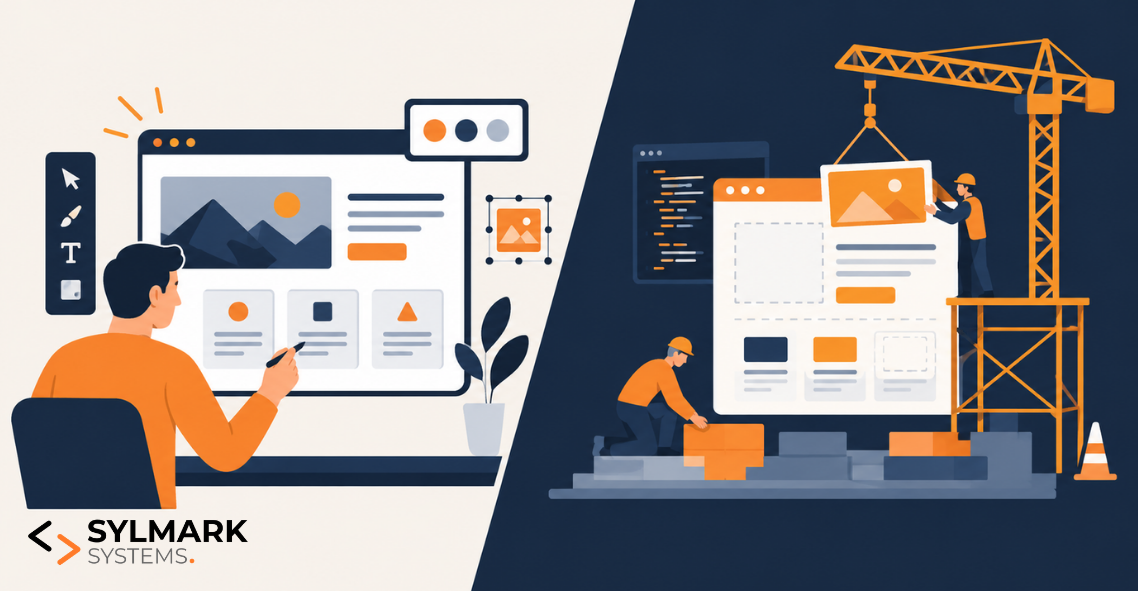
DIY Website Builder vs. Custom Website: Which Is Right for You?
The best option depends on what your business needs today and where you want it to go.
A DIY website builder may be the right choice if:
- You're launching a new business with a limited budget.
- You need a relatively simple website.
- Your existing platform provides all the features you need.
- You prefer to manage content and make changes yourself.
A custom website may be worth considering if:
- Your business requires specialized functionality or integrations.
- You need greater flexibility over design and development.
- Your website plays an important role in generating leads or sales.
- Your current platform is limiting your plans for growth.
- You want a website built around your specific business processes and customer needs.
Neither option is automatically better for everyone. The goal is to choose a solution that provides the right balance of cost, flexibility, performance, and long-term value.
Ready for a Website That Grows With Your Business?
Your website should support your business as it grows—not hold it back. If your current platform is limiting your design options, integrations, performance, or ability to deliver the experience your customers expect, it may be time to explore a better solution.
At Sylmark Systems, we build custom websites around your business goals, with room to expand as your needs evolve. From professional business websites to tailored web applications, we focus on creating practical solutions that help businesses strengthen their online presence.
We'll help you understand your options and determine whether improving your existing website or investing in a custom solution makes the most sense for your business.
Contact Sylmark Systems for a free website review and discover opportunities to improve your website's design, usability, performance, and functionality.
Discussion
Be the first to comment
Your email address will not be published.